What Is Pump and Dump? How the Scheme Works in 2026
 Robert J. Williams
 Alexandra Winters
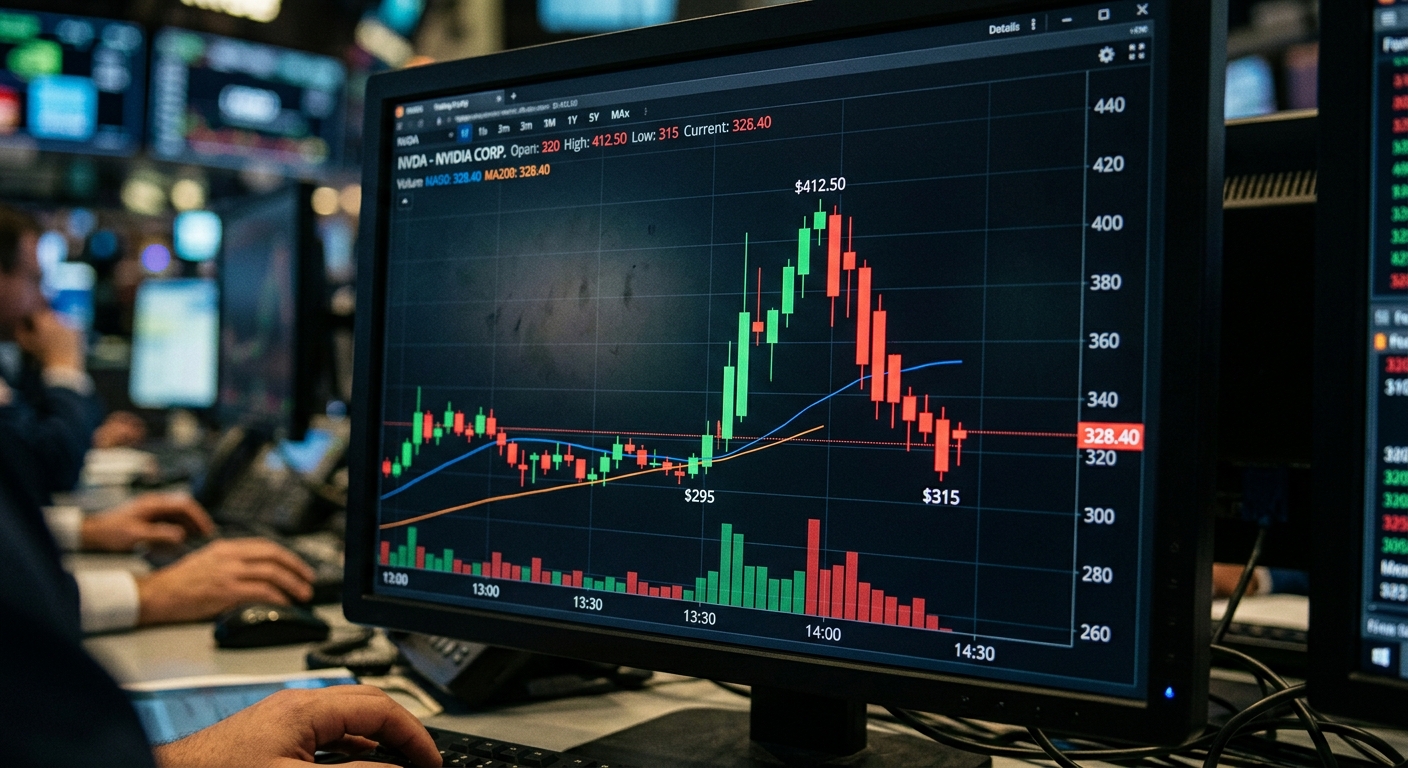
It’s 11 p.m. Your phone buzzes. A Telegram notification from a group you barely remember joining: “LIFTOFF 🚀 — [COIN] IS THE NEXT 100X. BUY NOW. DON’T MISS IT.”
The price is already up 40% in 18 minutes. Volume is exploding. Group members are posting green candles, fire emojis, and screenshots of their gains.
By 11:47, you’re holding a position worth 60% less than what you paid. The account that posted the signal? Gone. The coin? On a one-way trip to near-zero.
That’s a pump and dump in its modern form to answer your ‘what is pump and dump’ question. The scheme itself has been running, in one version or another, since at least the 1920s, when boiler rooms ran it by cold call. The platform changed. The playbook didn’t.
I’ve tracked dozens of these Telegram-coordinated pumps across 2023 and 2024 while researching this piece, and the pattern is almost mechanical in its consistency, the signal drops, the chart spikes for 8 to 15 minutes, and by the time most group members have executed, the organizers are already out.
What Is a Pump and Dump Scheme?
A pump and dump scheme is a form of market manipulation where a group artificially inflates the price of an asset through false or misleading promotion, then sells their holdings into the buying frenzy they created, leaving late buyers with losses.
The name does the explaining. They pump the price up. They dump their shares into demand. You become the exit liquidity.
It sounds crude. The execution isn’t always. Modern operations run across Telegram groups with 100,000+ members, AI-generated deepfake videos impersonating financial experts, and coordinated wash-trading bots that fake volume to attract algorithmic buyers. The mechanics have scaled. The core deception hasn’t.
Three groups run this scheme: fraudulent promoters who own shares before the campaign starts, market makers who fabricate trading volume, and influencers — some paid, some operating their own positions, who provide the megaphone. Any one of the three can be prosecuted. All three usually know exactly what they’re doing.
How the Mechanics Work — Accumulate, Pump, Dump
Every pump and dump follows the same three-phase structure, regardless of asset class.
Phase 1: Accumulation
The organizers buy their position quietly, before any promotion begins. Let me explain, they target thinly traded stocks or low-liquidity crypto tokens, assets where small buying pressure moves price disproportionately. The goal is to accumulate a large stake at low cost without tipping the market.
Phase 2: The Pump
Once positioned, they launch the campaign. False claims: the company just signed a major contract, the coin is partnering with a Fortune 500 firm, an unnamed hedge fund is about to buy in. These get blasted to newsletter lists, stock forums, Discord and Telegram channels, social media accounts with large followings. Some modern operators use AI-generated deepfakes of Warren Buffett or Elon Musk endorsing the asset. Retail buyers flood in, driving price up further. That price action attracts momentum traders who pile on without checking the thesis.
Phase 3: The Dump
Organizers sell into the rising price, slowly enough not to crater it immediately, fast enough to get out before the music stops. When they’re out, promotional activity ceases. Price collapses. Retail holders are left with losses ranging from significant to total.
The full cycle can complete in under eight minutes in crypto markets, according to the CFTC.

“Pump and dump schemes exploit a fundamental asymmetry — the promoters control both the narrative and the exit. By the time retail participants see the price move, the trade is already over for the people who engineered it.” — Gary Gensler, former SEC Chair
Real Pump and Dump Examples That Made Headlines
Stratton Oakmont — The Wolf of Wall Street Version
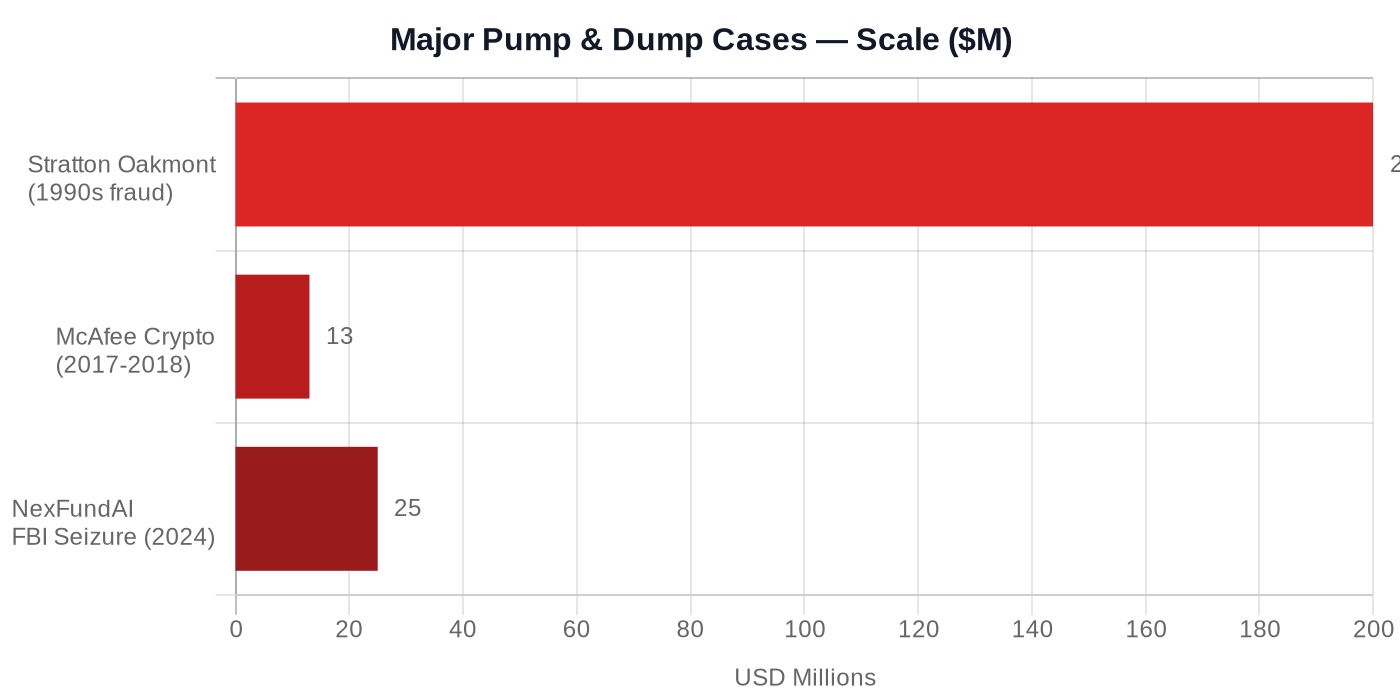
In the 1990s, Jordan Belfort’s brokerage Stratton Oakmont ran what became the most publicly recognised pump and dump operation in history. The firm cold-called investors, pushed penny stocks the firm already owned at inflated valuations, and sold shares into the buying interest they generated. Belfort was eventually convicted of securities fraud and money laundering, serving 22 months in federal prison. The scheme reportedly defrauded investors of over $200 million.
Jonathan Lebed — A Teenager, A Chat Room, $285K Settlement
Before social media existed, Jonathan Lebed was already doing influencer-style pump and dumps on Yahoo Finance message boards. Starting at age 14, Lebed would buy shares of obscure micro-cap stocks, then flood boards with dozens of posts claiming the stock was on the verge of massive moves. He settled with the SEC in 2000, agreeing to return $285,000 in profits. He was never prosecuted criminally, and the SEC’s reluctance to charge him harder remained controversial.
John McAfee — $13 Million in Crypto Promotions
From December 2017 to October 2018, John McAfee and his “McAfee Team” ran a crypto pump and dump scheme that earned more than $13 million. McAfee would buy altcoinsincluding Verge (XVG), Reddcoin (RDD), and Dogecoin (DOGE), then tweet about them to his millions of followers without disclosing his ownership position. Prices would spike; the team would sell. McAfee was indicted in March 2021 on seven counts including wire fraud and money laundering conspiracy. He died in a Spanish prison in June 2021 while awaiting extradition.
NexFundAI — The FBI’s Own Crypto Token
This one’s genuinely unusual. In October 2024, the U.S. Department of Justice announced charges against 18 individuals after the FBI created its own cryptocurrency — called NexFundAI — to catch wash traders and pump-and-dump operators in the act. Market makers ZMQuant, CLS Global, and MyTrade allegedly wash-traded on NexFundAI’s behalf, not realising the token was an FBI honeypot. In one recorded conversation, a defendant told an undercover agent his bots could execute “pump and dumps” explicitly. DOJ seized $25 million. The case was the clearest documented example of how professional market makers sell manipulation-as-a-service in crypto.
GameStop — A Partial Exception Worth Understanding
The 2021 GameStop situation gets called a pump and dump frequently. It wasn’t or at least wasn’t a simple one. The WallStreetBets-driven squeeze was primarily a coordinated short squeeze against heavily shorted institutions, not a fabricated claim about GameStop’s business fundamentals. GME went from approximately $20 to $483 in under two weeks before collapsing nearly 90% to $53.50 in February 2021. Some participants undoubtedly sold into the top with coordinated intent. Most retail buyers were genuinely speculative. The SEC’s 2021 report stopped short of calling it an illegal pump and dump but noted the episode showed how social media could be weaponised for price manipulation.
Pump and Dump in Crypto: A Different Playing Field
Crypto is where pump and dump has gone industrial. The speed, anonymity, and low regulatory oversight of token markets have turned the scheme from an occasional enforcement problem into something resembling a systemic feature of the space.
Chainalysis’ 2025 market manipulation report found that more than 4.5% of all tokens launched in 2024 showed characteristics consistent with pump and dump schemes. Over 3 million tokens were launched that year. The math is uncomfortable.
More than 4.5% of all tokens launched in 2024 displayed pump-and-dump characteristics, with approximately $2.57 billion in potential wash trading identified across Ethereum, BNB Smart Chain, and Base chains in 2024. Nearly 90% of decentralised exchange pools suspected of scheme involvement were “rugged” by creators shortly after the pump concluded. (Chainalysis, Crypto Market Manipulation Report, 2025)
The operational tempo is faster than most retail traders can track. CFTC advisories note that coordinated crypto pumps can complete in under eight minutes — schemes announce buy signals with countdown timers, execute coordinated buying bursts, then organizers exit before most group members have even filled their orders. Average users attempting to trade the pump become the unwitting demand that organizers sell into.

“The combination of pseudonymous trading, minimal listing requirements, and global 24/7 liquidity has made token markets the most efficient venue for pump and dump schemes in financial history.” — Jonathan Levin, Co-founder & CEO of Chainalysis (attributable from Chainalysis’ 2025 report commentary and public statements)
Is Pump and Dump Illegal? Is It Considered Insider Trading?
In the U.S., pump and dump is unambiguously illegal under securities law. Section 9(a)(2) of the Securities Exchange Act of 1934 prohibits manipulative trading activity designed to create artificial prices. The SEC and DOJ prosecute it as securities fraud, penalties include up to 20 years in federal prison and civil disgorgement of profits.
The insider trading comparison comes up constantly. They’re related but distinct.
- Insider trading involves trading on material non-public information, information you obtained through a breach of fiduciary duty or misappropriation. A corporate executive selling shares before announcing bad quarterly results is insider trading. The “inside” part refers to privileged access to facts about a company.
- Pump and dump involves spreading false or misleading public information to manipulate prices. The promoters aren’t using secret corporate knowledge — they’re manufacturing artificial hype. That distinction matters legally, though both are federal crimes. In practice, a scheme can incorporate both elements: organizers might use non-public information to select target companies, then layer in the manipulation campaign on top.
In crypto, the regulatory picture gets messier. Most tokens aren’t classified as securities, which limits the SEC’s jurisdiction. The CFTC has anti-fraud authority over crypto commodities but narrower enforcement powers. That gap is why the DOJ’s wire fraud charges in cases like NexFundAI have become the primary enforcement tool — they don’t require the asset to be a security.
What Is Spoofing in Trading?
Spoofing is pump and dump’s close cousin, same intent (price manipulation), different mechanism.
A spoofer places large buy or sell orders they intend to cancel before execution. The orders create a false impression of market depth: other traders see what looks like significant demand or supply and adjust their behaviour accordingly. The spoofer then trades against the reaction they’ve manufactured.
The most expensive spoofing case in U.S. history: JPMorgan agreed to pay $920 million to the CFTC and DOJ in 2020 for years of manipulating precious metals and Treasury markets. Traders placed thousands of spoof orders, canceled them, then executed their real positions against the artificial price movements.
Navinder Sarao, whose spoofing algorithms helped trigger the 2010 Flash Crash, faced 22 criminal counts. His E-mini S&P 500 spoof orders totaled around $200 million in bets that were modified or replaced 19,000 times before cancellation. He eventually cooperated with authorities and avoided prison. Sarao’s case made clear that spoofing algorithms can generate market-wide disruption, not just individual trade-level profits.
Spoofing carries up to 10 years in federal prison per violation under the Commodity Exchange Act.
Dark Pool Trading and Market Manipulation
Dark pools are private trading venues where institutional orders execute away from public exchanges. They’re legal and often serve a legitimate function, letting large funds trade without moving markets against themselves.
The pump and dump connection is indirect. Because dark pool trades aren’t reported in real time, they can obscure institutional accumulation before a campaign begins. Organizers building a large position in a thinly traded stock might route trades through multiple dark pools to avoid detection on exchange order books. The SEC has taken action against dark pool operators who failed to disclose how they handled information asymmetry between participants — but dark pool trading itself isn’t rogue trading or inherently manipulative.
The distinction worth keeping: dark pools facilitate large legitimate trades. When they’re misused to conceal the accumulation phase of a manipulation scheme, they become part of the fraud infrastructure.
Nancy Pelosi and the Insider Trading Debate
Nancy Pelosi hasn’t been charged with insider trading. That distinction matters, but it doesn’t end the conversation.
The allegations centre on her husband Paul Pelosi’s stock trades, which critics argue were timed suspiciously well around policy announcements — including chip funding legislation and Visa antitrust investigations. Rep. Anna Paulina Luna has publicly argued that a 17,000% portfolio return since entering Congress is statistically implausible without access to non-public government information. Senator Rick Scott formally requested a GAO audit of the Pelosis’ trading history in 2025.
The legal context: the STOCK Act of 2012 was meant to prohibit congressional insider trading. Its enforcement mechanism is a $200 fine. No member of Congress has ever been prosecuted under it, despite documented disclosure violations across both parties.
Congressional trading isn’t pump and dump. It’s more accurately characterised as a potential insider trading issue, trading on material information that flows through legislative work, not through corporate breaches. Whether it meets the legal threshold for prosecution is a question enforcement agencies haven’t answered. The House Administration Committee held a hearing on the issue in November 2025.
The bottom line for traders: Pelosi trade disclosures (public under the STOCK Act) are widely tracked and copied. What you probably shouldn’t do is treat them as real-time signals without understanding the timing lag — disclosures can come 45 days after the trade.
How to Spot a Pump and Dump Before You’re the Exit Liquidity
- Sudden, unexplained price spike. If a penny stock or low-cap token is up 50%+ in hours with no news, no earnings catalyst, and no institutional involvement — that pattern is the scheme running. The price movement IS the evidence of manipulation.
- Coordinated messaging across platforms. Identical or near-identical promotional text appearing on Telegram, Discord, Reddit, and Twitter within a short window isn’t organic retail enthusiasm. It’s coordinated. Real investment theses don’t replicate across platforms word-for-word.
- Anonymous or unverifiable promoters. Legitimate analysts put their name and track record behind their views. Anonymous Telegram accounts with zero verifiable history don’t.
- No credible company fundamentals. Micro-cap stocks with no revenue, no audited financials, and no identifiable management team getting hyped as “the next Google” are almost always scheme targets. Do the basic check: SEC EDGAR for filing history, Google for the named executives.
- “Guaranteed returns” language. No legitimate investment involves guaranteed returns. Anyone using that phrase in a promotional context is either naive or lying.
- Countdown timers. Crypto pump groups literally use countdown timers: “Buy in 10 minutes.” That’s not analysis. That’s coordination signaling.

Author’s Take
Pump and dump isn’t a niche scam that only catches naive retail traders. The NexFundAI case showed professional market makers offering manipulation-as-a-service to crypto projects — not shadowy basement operators, but firms with websites and client lists.
The hard truth: if you’re trading on social media tips, Telegram signals, or anything with a countdown timer attached, you’re not speculating. You’re providing liquidity for someone else’s exit. The due diligence bar for avoiding these schemes isn’t high, check who’s promoting, check whether there are fundamentals to justify the move, and be suspicious of anything that’s already up 40% before you hear about it.
The scheme works because urgency kills scepticism. Take the time. The 100x coin will still be there in 20 minutes and if it won’t, that tells you exactly what it is.
Conclusion
The answer to the question ‘what Is Pump and Dump’ has been provided here with great detail. Pump and dump schemes have survived every market evolution from 1920s boiler rooms to Telegram countdown timers, because the underlying mechanic never changes: manufactured urgency exploiting uninformed demand. The cases covered here, from Stratton Oakmont’s cold-call operation to the FBI’s NexFundAI sting, show that enforcement is catching up, but the sheer volume of token launches means most schemes still go unpunished. Your best defense isn’t regulation — it’s skepticism. If a trade requires you to act before you can think, you’re not the trader. You’re the product. Verify the promoter, check the fundamentals, and treat urgency as a red flag, not a catalyst.
Frequently Asked Questions
1. What is pump and dump in trading?
Pump and dump is a market manipulation scheme where promoters artificially inflate the price of an asset — through false claims, coordinated buying, or fake volume — then sell their holdings into the demand they created. The price collapses after the sell-off, leaving late buyers with losses. It’s illegal under U.S. securities law and prosecuted by both the SEC and DOJ.
2. Is pump and dump the same as insider trading?
No — they’re related but distinct crimes. Insider trading involves using material non-public information (like unreleased earnings data) to trade. Pump and dump involves spreading false or misleading public information to manufacture artificial demand. Both are federal crimes, but insider trading requires a breach of fiduciary duty or misappropriation; pump and dump requires intentional market manipulation through deception.
3. Is pump and dump illegal in crypto?
Yes, though enforcement is complicated by regulatory gaps. Most tokens aren’t classified as securities, limiting SEC jurisdiction. The CFTC has anti-fraud authority over crypto commodities. The DOJ typically pursues crypto pump and dump through wire fraud charges — as in the October 2024 NexFundAI case, where 18 individuals were charged and $25 million seized. It’s illegal. It’s just harder to prosecute than in traditional markets.
4. What is spoofing in trading?
Spoofing is placing large buy or sell orders with intent to cancel them before execution — creating a false impression of market depth to manipulate prices. It’s a federal crime carrying up to 10 years in prison per violation. JPMorgan paid $920 million in 2020 to settle spoofing charges involving precious metals and Treasury markets.
5. What is dark pool trading?
Dark pools are private, off-exchange trading venues used by institutional investors to execute large orders without moving public market prices. They’re legal and regulated. The overlap with market manipulation occurs when dark pool trades are used to conceal the accumulation phase of a pump and dump scheme — building a position quietly before the public promotion campaign begins.
6. Was GameStop a pump and dump?
Not precisely. The 2021 GameStop squeeze was primarily driven by a coordinated short squeeze against institutions with heavy short positions — not by false claims about GameStop’s business fundamentals. GME peaked near $483 and then fell roughly 90%. The SEC reviewed the episode and stopped short of classifying it an illegal pump and dump, though it acknowledged social media’s potential for price manipulation. Some participants certainly sold into the top strategically.
Disclaimer: This article is educational and does not constitute financial or legal advice. If you believe you’ve been a victim of market manipulation, report it to the SEC at SEC.gov/tcr or the CFTC at CFTC.gov/Complaint.
About Author