Robert J. Williams
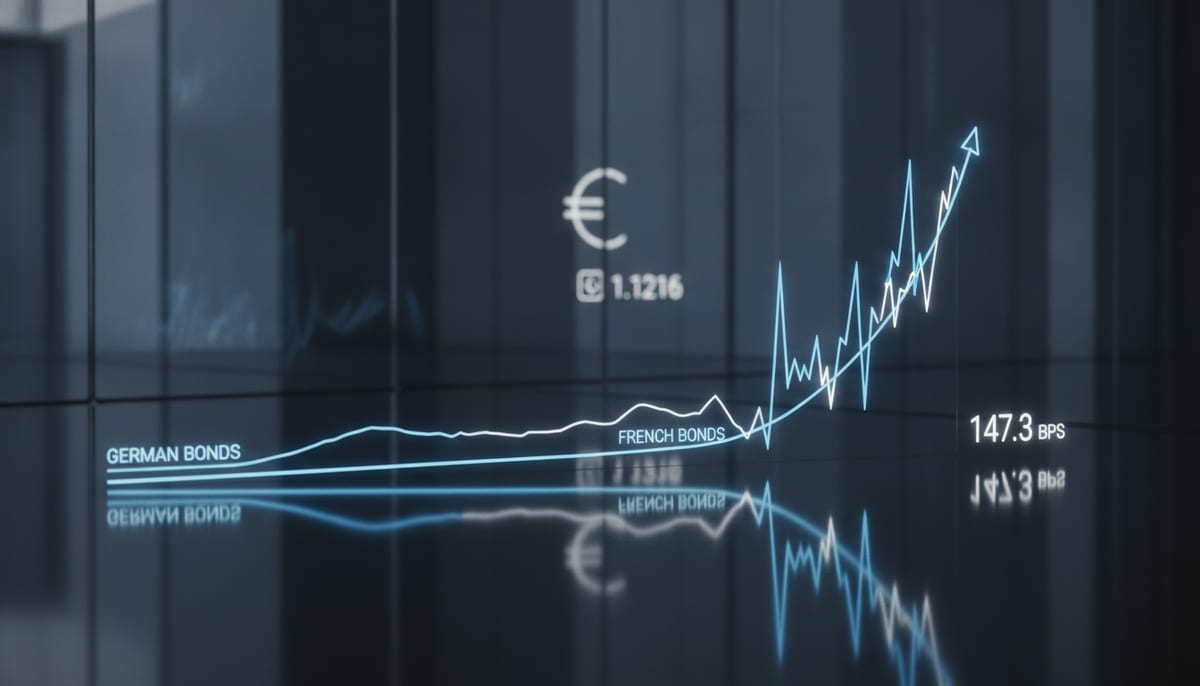
The euro held at $1.1216 as Asian trading opened on Tuesday, Oct. 20, 2026, Reuters reported. The gap between French and German 10-year borrowing costs had widened 9.9 basis points (bps) to 147.3 bps the previous session. The dollar index rose 0.2% to 101.98 on Monday, ending two days of losses. Against the yen the dollar sat flat at 158.56, ahead of an auction of 20-year Japanese government bonds. That sale drew bids worth 5.84 times the amount offered, the strongest demand on record.
Nothing in the G10 Moved More Than 0.1%
Sterling at $1.3308, the Australian dollar at $0.6986 and the New Zealand dollar at $0.5668 each gained 0.1%. The offshore yuan held at 6.6811 per dollar. The US 10-year Treasury yield was unchanged at 5.131%.
“FX markets reflected the improvement in risk appetite, with higher-carry currencies finding buyers,” Chris Weston, head of research at Pepperstone Group, told Reuters. Europe, he added, “was less convincing.”
| Instrument | Level, Asian open Oct. 20, 2026 | Change |
|---|---|---|
| EUR/USD | $1.1216 | Steady |
| Dollar index | 101.98 | +0.2% (Monday close) |
| USD/JPY | 158.56 | Flat |
| GBP/USD | $1.3308 | +0.1% |
| AUD/USD | $0.6986 | +0.1% |
| NZD/USD | $0.5668 | +0.1% |
| Offshore yuan | 6.6811 per dollar | Flat |
| US 10-year Treasury | 5.131% | Flat |
| Bitcoin | $81,906.58 | Flat |
| Ether | $2,405.99 | +0.3% |
French Credit Priced the Weekend That the Euro Ignored
Paris police ordered an overnight curfew across two central districts, Place de la République and Les Halles, from 11 p.m. Monday until 6 a.m. Tuesday. Separate curfews covered Lille, Douai, Wattignies and Denain from 8 p.m. local time. French authorities reported roughly 2,400 arrests after a weekend of protests over education and the cost of living.
Italy answered its own unrest with soldiers. “From words to action: 500 more troops to defend Milan,” Deputy Prime Minister Matteo Salvini wrote on social media, after an emergency security meeting chaired by Prime Minister Giorgia Meloni.
Spot FX registered none of this. The French-German bond spread registered all of it. Monday’s 9.9 bps widening implies a prior close near 137.4 bps, which leaves French paper at the wide end of its October range.
Tuesday’s Budget Vote Gives France a Second Price Point
The National Assembly starts examining the revenue half of the 2027 budget on Tuesday evening. Prime Minister Sébastien Lecornu’s minority government is targeting a deficit of 5% of GDP through €43 billion in spending cuts. The Socialist Party plans to table a motion rejecting the budget outright.
That motion looks unlikely to carry. The National Rally said it would not back it. “We want a debate, and we will not give the Macron government the gift of avoiding a confrontation in the chamber,” said Jean-Philippe Tanguy, a senior National Rally lawmaker.
Tuesday’s vote covers tax revenues only. It measures whether Lecornu can hold a chamber he does not control, rather than settling the budget itself.
Japan’s 20-Year Auction Drew Record Demand
The bid-to-cover ratio came in at 5.84, against 4.01 at the previous sale and a 12-month average of 3.73. The tail narrowed to 0.07 from 0.15 a month earlier. The 20-year yield then fell as much as 6 bps to 3.71%, its lowest since Sept. 9.
The rest of the curve split. The 10-year yield rose 1.5 bps to 2.920%, while the 30-year eased 1.5 bps to 3.970%.
Katsutoshi Inadome, senior strategist at Sumitomo Mitsui Trust Asset Management, said the auction suggested many investors expected a bond-market rebound. Fukoku Mutual Life Insurance said yields had risen more than expected, giving it room to trim overseas bond holdings and move funds into yen-denominated debt.
That second comment carries a currency consequence. A Japanese life insurer repatriating out of foreign bonds has to buy yen to do it.
Takaichi Rejects the “Takaichi Yen” Label
Prime Minister Sanae Takaichi told parliament on Monday that she would not accept blame for the currency or for borrowing costs. “I’ve been criticized a lot for things like ‘Takaichi’s weak yen’ and ‘Takaichi’s high interest rates,'” she said. “I categorically reject those claims.”
Her answer pointed at growth and issuance. A stronger domestic economy would rebuild confidence in the yen, she said, and she would control government bond issuance appropriately in next fiscal year’s budget. The yen has traded at its weakest since 1986 under her administration.
What Traders Are Watching Next
France votes on budget revenues Tuesday evening. The Federal Reserve decides on Oct. 28. The Bank of Japan’s Policy Board meets Oct. 29-30 and publishes its quarterly Outlook Report alongside the Oct. 30 decision.
Pricing for that BOJ meeting is not settled across data providers. Implied probabilities of an October hike ranged from roughly 6% to 13% depending on the source, so the honest figure to quote is the range rather than a point estimate.
Analyst Take
Flat prices did not mean a quiet session. Four majors moved 0.1% or less while French credit risk repriced by nearly 10 bps, and both facts came out of the same market. The euro is priced off an entire currency bloc, so French political risk has to pass through French paper before it reaches the exchange rate. The spread is the instrument carrying the signal here, not the rate.
The auction is the more interesting of the two prints. Domestic buyers bid a record 5.84 times the amount offered, with the 20-year sitting near a 30-year high in yield. Fukoku Mutual Life said plainly that it was shifting out of foreign bonds to reach those levels. If Japanese institutions repatriate in size, yen demand starts arriving from the bond market instead of from the Bank of Japan. That would weaken the assumption that only a policy move can halt the slide.
One position worth holding loosely: traders appear to have filed European street unrest as a budget problem rather than a solvency problem. The spread widened on Monday and stopped at 147.3 bps, well inside the levels of the 2011-12 euro debt crisis. There is an obvious hole in that reading. A single session of bond pricing cannot separate a risk premium that has already repriced from one that is simply being ignored. The revenue vote in Paris is the first test capable of telling the two apart.
Frequently Asked Questions
Where was EUR/USD on Oct. 20, 2026?
The euro was steady at $1.1216 as Asian trading opened, according to Reuters. The dollar index stood at 101.98 after rising 0.2% on Monday, and the dollar was flat against the yen at 158.56.
What is the French-German bond spread and why does it matter more than EUR/USD here?
It is the gap between French and German 10-year government bond yields, and it is the market’s direct price on French credit risk. It widened 9.9 bps to 147.3 bps on Monday. The euro reflects conditions across the whole currency bloc, so French political trouble shows up in French borrowing costs well before it registers in the exchange rate.
How strong was Japan’s 20-year bond auction?
Bids came in at 5.84 times the amount offered, the highest on record, against 4.01 at the previous sale and a 12-month average of 3.73. The 20-year yield fell as much as 6 bps to 3.71% afterwards, its lowest since Sept. 9.
Why didn’t the euro fall when French and Italian cities saw unrest?
Risk appetite improved globally, which supported higher-yielding currencies, and the euro held at $1.1216. Chris Weston of Pepperstone Group told Reuters that Europe “was less convincing” than the broader move. The repricing landed in French bonds instead.
When do the Federal Reserve and Bank of Japan decide next?
The Fed announces on Oct. 28, 2026. The Bank of Japan’s Policy Board meets Oct. 29-30, releasing its decision and quarterly Outlook Report on Oct. 30, with Governor Kazuo Ueda’s press conference scheduled for 3:30 p.m. JST.
Sources
- Reuters, “Dollar and euro drift, yen slips as markets seek direction,” Oct. 19-20, 2026 (via Investing.com and New Straits Times)
- Bloomingbit, “Japan 20-Year Bond Auction Draws Record 5.84 Times Demand as Yield Spike Lures Buyers,” Oct. 20, 2026
- “Japan’s 20-year bond yield falls sharply after strong auction,” Oct. 20, 2026
- CNN, “Several French cities impose curfews after weekend of chaos and protests spreading to parts of Europe,” Oct. 19, 2026
- GreekReporter, “Europe at the Barricades: Paris Under Partial Curfew as Italy Plans 500 Troops for Milan,” Oct. 20, 2026
- CNBC, “Japanese Prime Minister Takaichi rejects criticism around weak yen and high interest rates,” Oct. 19, 2026
- Daybreak Wire, “French Budget Vote Oct. 20: What It Decides and What Follows,” Oct. 2026
- Finance Calendar, Bank of Japan rate decision schedule, Oct. 29-30, 2026
About Author