Dollar Slides as Traders Bet on Earlier Fed Rate Cuts After Weak US Data
 Robert J. Williams
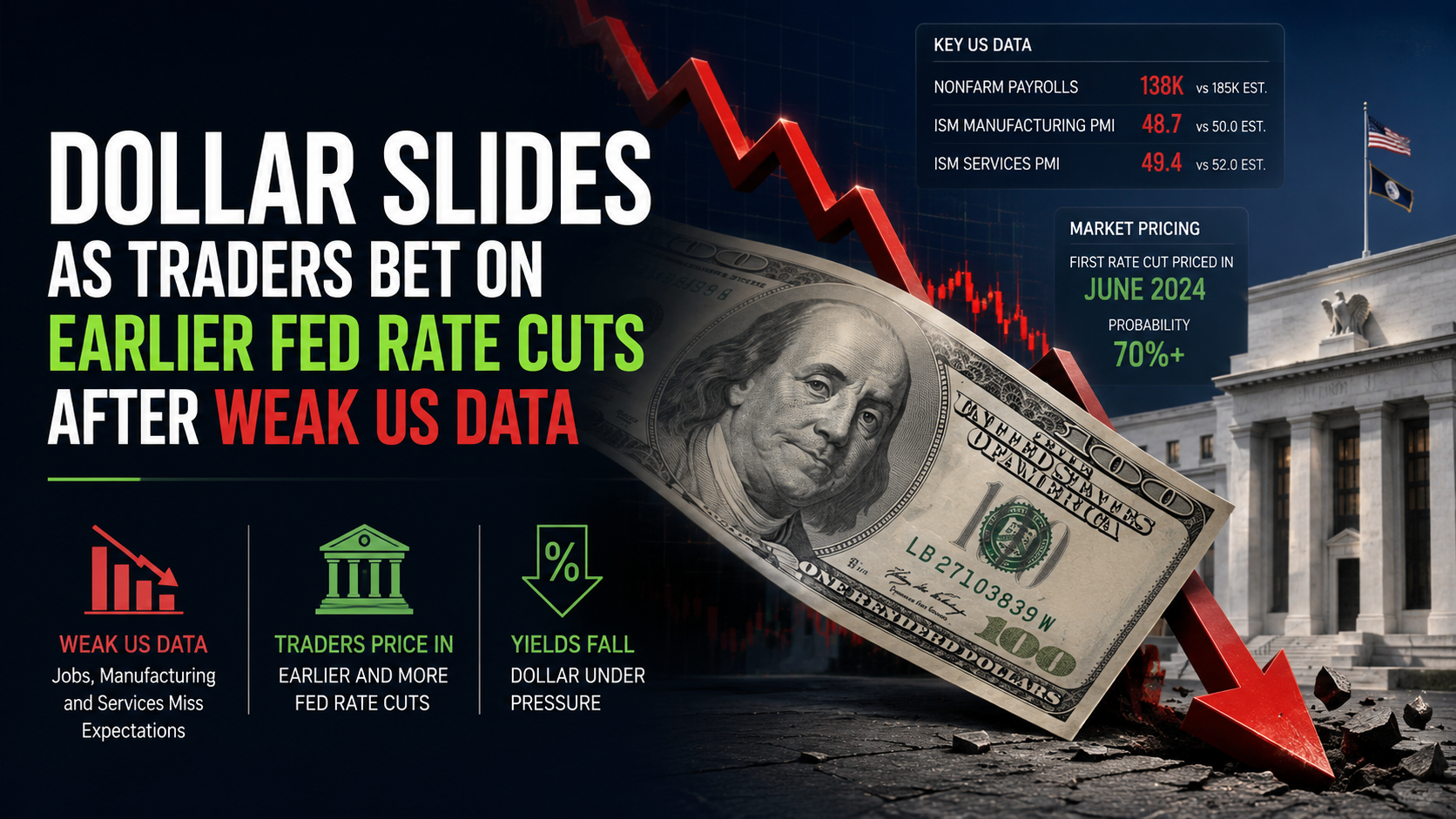
The US dollar fell against every Group of Ten currency on 8 June after a round of softer-than-expected economic data forced traders to rethink the Federal Reserve’s rate path. Rate futures shifted. Treasury yields dropped. And higher-yielding currencies caught the bid that the greenback lost.
Markets now price in a first Fed rate cut arriving sooner than they did a week ago. That single repricing drove most of the session’s action.
What Moved and Why
The greenback weakened broadly as FX desks pulled forward their expectations for a Fed cut. Risk-sensitive currencies gained — the Australian dollar, New Zealand dollar, and several emerging-market pairs all rallied as traders chased carry in a lower-rate-expectations environment.
Treasury yields edged lower across the curve, confirming the signal from currency markets. When bond traders and FX traders agree on direction, the move tends to stick. At least for the session.
The dollar index tracked against a basket of six major currencies tested recent support levels, according to multiple FX desk commentaries shared on X during the session.
The Fed’s Bind
The Federal Reserve has held rates steady for months. Until Sunday’s data, the consensus was patience — a central bank content to wait deep into the second half of 2026 before easing. That timeline just compressed.
Softer economic prints hand the Fed a different problem. Weaker growth data gives policymakers room to cut without stoking inflation fears. But cutting too early risks looking reactive. Too late, and the economy slows further with no cushion in place.
Rate futures now reflect higher odds of a cut landing before markets previously expected. The exact meeting is still a moving target, but the direction of the repricing is clear: forward, not backward.
Why Currency Markets Reacted Fast
For FX markets, rate differentials are the engine. That’s the mechanical reality of currency pricing. When US rates look like they’re heading lower, the dollar’s yield advantage over peers shrinks. Capital rotates toward currencies where carry still pays or where central banks are on a different trajectory.
Sunday’s session was a textbook version of that rotation. Traders unwound long-dollar positions and redeployed into currencies benefiting from the shift in relative rate expectations. Not a panic — more like a recalibration. But a sharp one.
Analyst Take
One soft data print doesn’t reverse a trend. The dollar has absorbed worse surprises this year and recovered within days. But the speed of the repositioning matters. It says something about how crowded the long-dollar trade had become.
When positioning is stretched, even modest data surprises trigger outsized moves. That’s what happened here. The data wasn’t catastrophic. The reaction was bigger than the catalyst, which usually means traders were already nervous and looking for a reason to lighten up.
The real test comes from what follows. If the next batch of US economic releases confirms a softening trend, the repricing sticks and the dollar has further to fall. If the next print runs hot, most of this move unwinds by midweek. Binary outcome, and neither side has strong conviction yet.
What to Watch Next
The upcoming US economic calendar will either validate or kill Sunday’s dollar move. Any scheduled appearances by Federal Reserve officials this week will be parsed word by word for signals about whether the softer data has shifted internal discussions.
The CME FedWatch tool remains the real-time scoreboard. Watch probability shifts around the September and November Federal Open Market Committee (FOMC) meetings — that’s where the repricing debate is concentrated right now.
About Author