US Dollar Slides to Multi-Week Lows as Fed Rate Cut Bets Surge
 Robert J. Williams
 Alexandra Winters
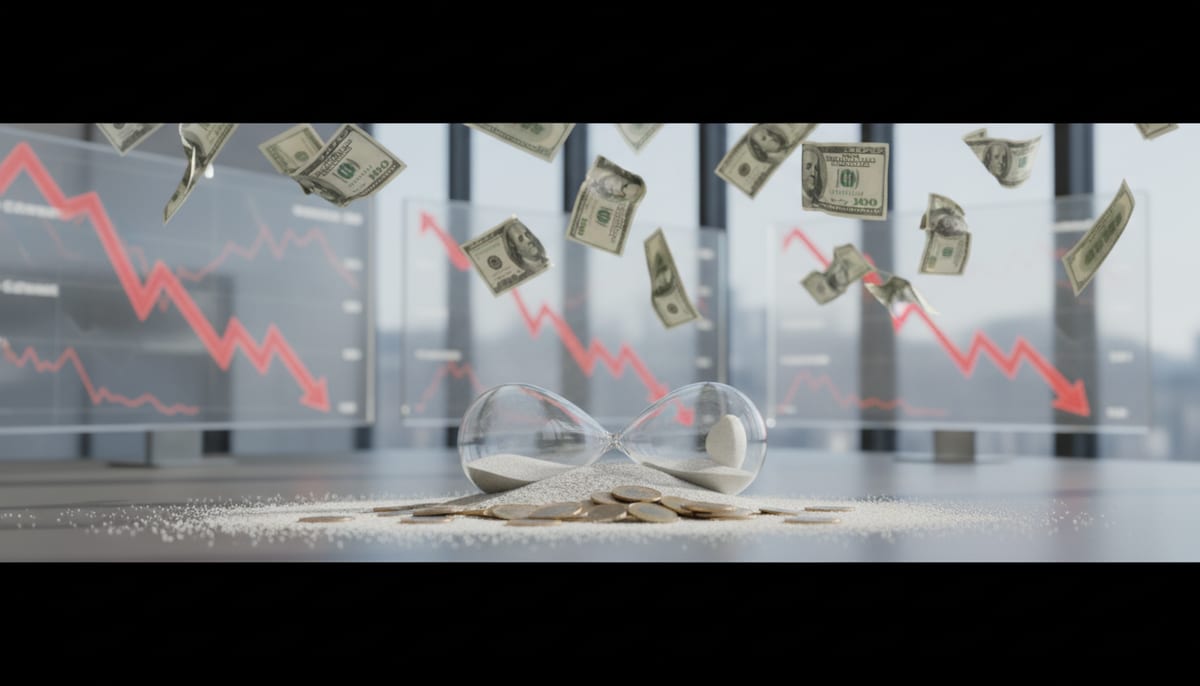
How much further can the dollar fall? After Wednesday’s batch of softer-than-expected US economic data, currency markets answered with a decisive shove lower — pushing the greenback to multi-week lows against a basket of major currencies on 14 May.
The dollar index broke below a technical support zone that had held for weeks. Yields retreated across the curve, and Fed-dated overnight index swap pricing shifted in a direction the dollar bulls won’t like: more cuts, sooner.
Soft Data, Hard Repricing
The move wasn’t driven by a single report. A string of weaker US macro releases landed below consensus, and traders responded by ramping up bets on Federal Reserve rate cuts this year. OIS markets — where real money prices the path of the Fed funds rate — repriced decisively dovish on Wednesday.
That distinction matters. Headline commentary about rate cut “expectations” can mean anything. OIS is where banks and hedge funds actually put capital behind their views. When that market moves, it reprices rate-sensitive FX pairs, Treasury yields, and credit spreads all at once.
This wasn’t a wobble. It was a recalibration.
The “US Exceptionalism” Trade Fades
For much of 2025 and into early 2026, the dollar stayed bid on a simple thesis: the US economy was outperforming peers, the Federal Reserve was in no rush to cut, and yield differentials favored the greenback. Traders called it the “US exceptionalism” trade. It worked for months.
That narrative is losing chapters. Recent data releases have come in below expectations with increasing frequency. None of them are catastrophic on their own — no single report screams recession. But the cumulative effect erodes the foundation the dollar’s strength was built on.
Consider the dynamic. When the US was growing faster than the eurozone, faster than Japan, faster than most of the G10, capital had a reason to park in dollar-denominated assets. Higher yields plus stronger growth equals demand for dollars. Simple math. But the gap between US and G10 growth expectations is narrowing, and when that gap closes, the yield premium that kept capital flowing into dollar assets starts to matter less.
The dollar doesn’t need a US recession to weaken. It just needs the rest of the world to stop underperforming.
Winners Across the Board
The euro and Japanese yen both gained ground against the weakening dollar. High-beta currencies — typically commodity-linked or emerging market FX that amplify risk-on moves — saw sharper rallies as the rate repricing unfolded without denting broader risk appetite.
That combination is worth noting. When the dollar weakens because of deteriorating US data, risk assets sometimes sell off too. Not this time. Equity markets held steady, credit spreads stayed tight, and the FX move looked clean: a dollar story, not a panic story.
Fast Money Piles Into Short Dollar
Bank positioning reports cited by Reuters showed fast money accounts — hedge funds and macro trading desks — adding to short-dollar exposure into the move. That’s a signal worth separating from the noise.
One-day dollar drops can happen on thin liquidity or stop-loss cascading. Those reverse quickly. But when positioning data confirms the direction of the price action — when leveraged accounts are deliberately building short exposure, not just getting stopped out of longs — the move tends to have follow-through.
Short dollar isn’t a crowded trade yet. But the passenger list is growing.
The Analyst Take
The setup is straightforward. US data is softening. The Fed hasn’t cut, but the market is pricing in cuts with more conviction. The dollar’s yield advantage story — the one thing keeping it propped up — is getting harder to defend.
None of this means the dollar is in freefall. The Federal Reserve still holds rates above most G10 central banks, and any upside surprise in upcoming data could snap DXY back toward its prior range. The structural case for dollar strength hasn’t vanished.
But the burden of proof has shifted. Dollar bulls need fresh evidence. Bears have momentum, positioning flow, and the data behind them. That’s a tough combination to fight.
What to Watch
Traders will focus on the next round of US economic releases, particularly inflation prints and labor market data. If the softening trend holds, rate cut pricing could extend further and drag the dollar with it.
Fed speakers hitting the wire in coming sessions matter too. Markets have moved ahead of the Fed on this one — if officials push back on the dovish repricing, the dollar could bounce. If they don’t, silence becomes confirmation.
The calendar is the referee now. Upcoming CPI prints and jobs numbers will either validate the soft-data trend or expose it as a blip. Until the next batch of releases lands, traders will be trading the momentum — and right now, that momentum runs against the dollar.
The 14 May session marked a shift in tone. Whether it marks a trend depends on what the data says next.
About Author