Fed Rules Out Rate Cuts Until Inflation Hits 2% Target, Sending USD Higher
 Robert J. Williams
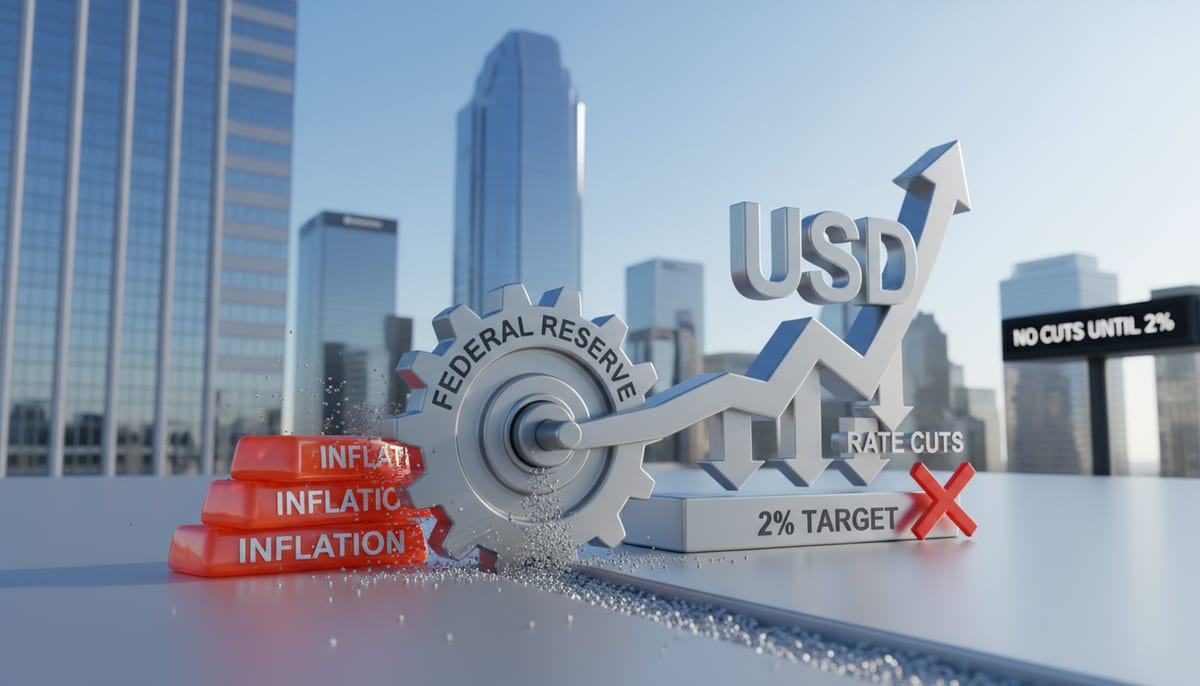
Federal Reserve officials ruled out interest rate cuts on Monday until inflation shows sustained movement toward the 2% target, triggering a broad rally in the US dollar.
The message was direct. No easing until the data cooperates. Markets responded within hours — bond yields climbed, rate-cut bets evaporated, and the greenback strengthened against every major counterpart.
What the Fed Said
Fed policymakers made their position clear on May 12: the current restrictive policy stance holds until inflation data proves the job is done. Not close to done. Done.
That’s a higher bar than many traders expected. Futures markets had been gradually pricing in a mid-2026 rate cut, building positions around a July or September move. Those bets came apart fast on Monday.
The Federal Reserve has maintained its benchmark rate at elevated levels throughout 2026, and Monday’s comments suggest that won’t change anytime soon. Officials pointed to persistent price pressures — particularly in services — as the reason for staying the course.
Dollar Rallies, Bonds Sell Off
The US dollar surged against major currencies within hours. The move was sharp and broad-based.
Currency markets repriced quickly:
| Pair | Direction | Driver |
|---|---|---|
| EUR/USD | Lower | Dollar strength on repriced rate expectations |
| USD/JPY | Higher | Widening US-Japan yield differential |
| GBP/USD | Lower | USD bid despite Bank of England’s own hawkish stance |
| AUD/USD | Lower | Risk-off tone weighed on commodity currencies |
Bond markets mirrored the forex reaction. Treasury yields rose sharply across the curve, with the rate-sensitive 2-year note leading the selloff. Higher-for-longer isn’t a new theme. But the Fed put an exclamation point on it Monday.
Why Inflation Remains the Sticking Point
The Fed’s 2% inflation target has been the benchmark since 2012. When officials say “sustained progress,” they mean months of consistent data — not one favorable Consumer Price Index print.
That distinction is everything for rate traders.
Services inflation, the stickiest part of the CPI basket, remains above where policymakers want it. Housing costs, medical care, and insurance prices have been slow to fall even as goods inflation has cooled. Until services come down, the Fed’s hands are tied.
This is the third time in 2026 that Fed officials have pushed back against market pricing for near-term cuts. Each time, the pattern repeats: dollar up, yields up, rate futures repriced. Traders bet on a pivot, the Fed says no, and positions unwind.
The market keeps trying to front-run a turn that hasn’t arrived.
Rate Cut Timeline: What Markets Are Pricing Now
Before Monday’s comments, fed funds futures had pointed to a possible cut as early as July 2026. That’s shifted.
Traders are now looking at September at the earliest, with some desks pushing expectations into Q4 or even early 2027. The repricing was swift — a sign that positioning had gotten ahead of the fundamentals.
For forex traders, the timeline matters because rate differentials drive currency flows. As long as the Fed holds while other central banks ease — or at least signal easing — the dollar has a structural bid underneath it.
The Analyst Take
There’s a logic to the Fed’s stubbornness that gets lost in the frustration. Cutting too early and watching inflation reaccelerate would destroy what’s left of the credibility the 2022-2023 hiking cycle was designed to build. The cost of being late on cuts is measured in quarters of slower growth. The cost of being early is measured in years of unanchored expectations.
That’s not a close call.
Bond yields at current levels also do some of the Fed’s work. Tight financial conditions slow demand without requiring additional hikes. From the Fed’s chair, the current stance is working as intended.
Doesn’t mean markets have to like it.
What to Watch Next
Two dates matter in the near term.
The May CPI report, due in mid-June, will be the next hard data point on inflation. If core CPI stays sticky, rate-cut pricing could slide into Q4 2026 or later.
The June Federal Open Market Committee (FOMC) meeting brings fresh economic projections, including the dot plot — the Fed’s own rate path forecast. Any shift in the median dot will move markets more than commentary.
Until then, the dollar has the tailwind. The rate differential favors the greenback, and the Fed isn’t in any rush to narrow it.
About Author