Robert J. Williams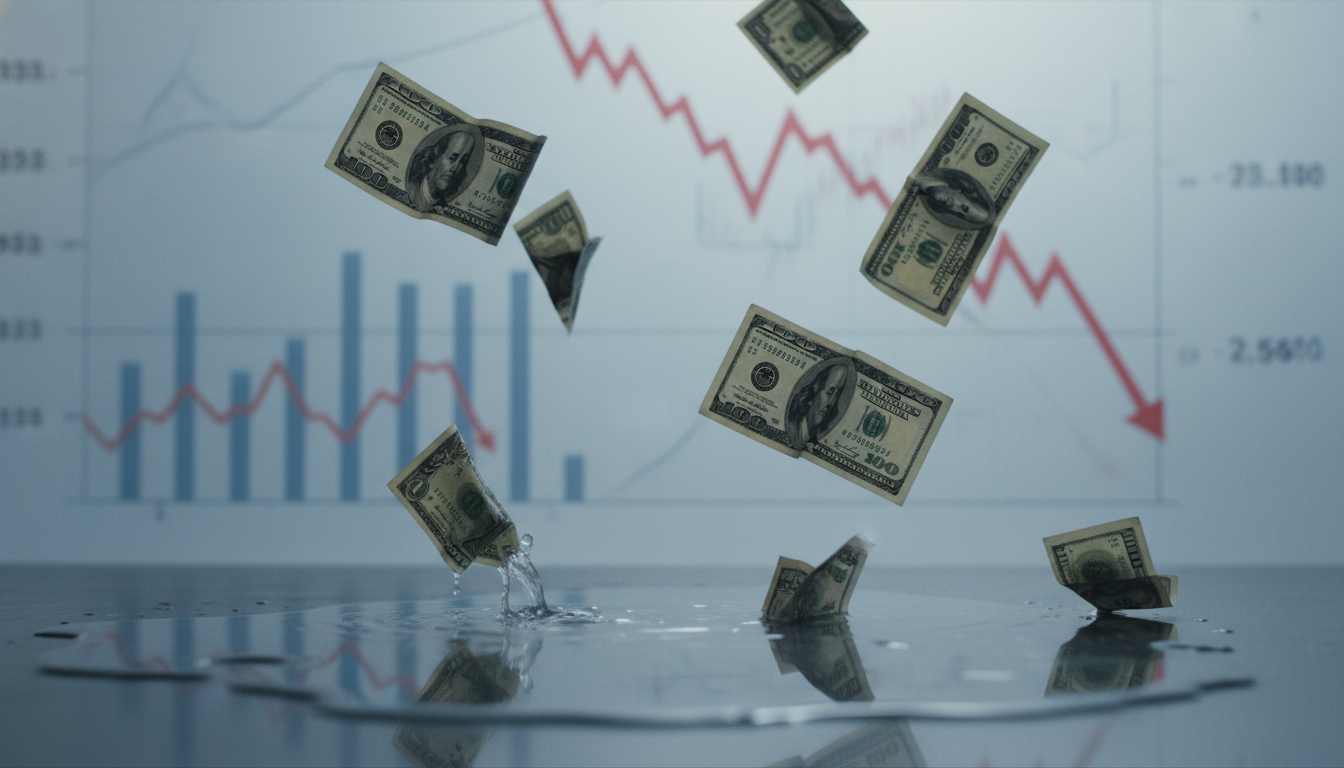
The US dollar dropped against its major peers on Monday after a batch of softer-than-expected economic data gave traders fresh ammunition to bet on earlier Federal Reserve rate cuts.
What Happened
Weaker US figures released on 2 June 2026 triggered a broad sell-off in the greenback. Futures markets repriced quickly. Implied probabilities of a rate cut before year-end jumped, according to Reuters, pressuring the dollar index lower across the London and early New York sessions.
EUR/USD and GBP/USD both caught a bid as money rotated into higher-yielding and risk-sensitive currencies. That’s the pattern that keeps repeating this cycle: soft data lands, rate-cut odds spike, and the dollar gives back ground it spent weeks clawing higher.
Why Soft Data Matters Right Now
The Federal Reserve has held rates at restrictive levels for an extended stretch. Every weak data print chips away at the case for keeping policy tight. Monday’s numbers added to a string of readings suggesting the US economy is cooling faster than the Fed’s own projections anticipated.
Markets don’t wait for the Fed to act. They front-run. And right now, futures pricing is doing exactly that, pulling forward the expected timing of the first cut. The gap between what the Fed signals and what traders price in has been widening for weeks. Monday just made it wider.
For the dollar, that gap is poison. Currency markets trade on rate differentials, and when the market decides US rates are heading lower before the Fed admits it, the greenback sells off.
The Bigger Picture
This isn’t a one-day story. The dollar has been caught between two forces all year.
On one side, US economic exceptionalism — the narrative that kept the dollar strong through 2024 and much of 2025. American growth outpaced Europe, the UK, and Japan. Rate differentials favored the greenback. Money flowed into dollar assets.
On the other side, gravity. Restrictive monetary policy eventually slows an economy. Consumer spending cools. Hiring softens. Manufacturing contracts. The data doesn’t flip overnight, but the drip of weaker readings accumulates until the market’s story changes.
Monday’s move suggests the story is changing. Not dramatically — this wasn’t a crash. But the direction is clear. Traders are positioning for a world where the Fed cuts, and that world favors currencies on the other side of the dollar trade.
Which Currencies Gained
Higher-yielding and risk-sensitive currencies led the rally against the greenback. EUR/USD moved higher as European rate expectations held steady relative to the US. GBP/USD followed a similar path. Commodity-linked currencies and emerging market FX also firmed, according to Reuters.
The logic is straightforward. When US rate-cut expectations rise, the yield advantage of holding dollars shrinks. Capital that parked in US assets for the carry trade starts looking elsewhere. Monday was a textbook example of that rotation.
The Analyst’s Take
Rate-cut pricing has been wrong before. Traders spent the first half of 2024 betting on six or seven cuts that never came. The Fed held firm, and the dollar rallied as those bets unwound.
But the setup in June 2026 is different. Back then, inflation was still sticky and the labor market was running hot. Now the data is cooperating — cooling in a way that gives the Fed cover to ease without looking reckless.
The risk? That one soft data print gets over-extrapolated. Markets have a habit of sprinting ahead of the fundamentals, and a single strong jobs report or hot inflation reading could snap the dollar back higher.
Still, the trend in rate expectations is clear. Each weak data release adds to the case that the Fed’s next move is a cut, not a hold. The dollar stays under pressure until something stronger comes along to change the narrative.
What to Watch Next
The next major test comes with the US jobs report due later this week. A weak payrolls number would reinforce the rate-cut narrative and likely push the dollar lower still. A strong number would force traders to unwind some of Monday’s positioning.
Beyond payrolls, the June Federal Open Market Committee (FOMC) meeting looms. The Fed won’t cut at that meeting — not with the current data alone. But the statement language and updated dot plot will signal whether officials are closer to easing than their last projections suggested.
Traders will parse every word. That’s where the next move in the dollar gets decided.
About Author