Robert J. Williams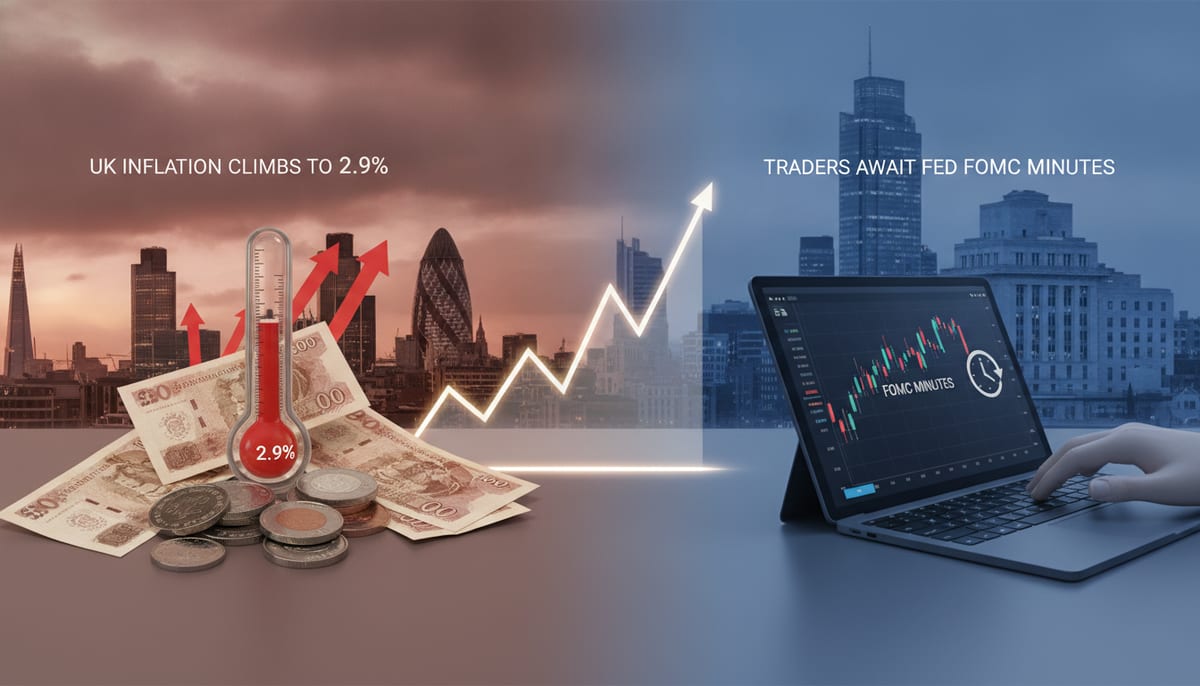
UK headline inflation accelerated to 2.9% in the year to July, up from 2.6% in June, landing just as currency traders shifted their focus to the Federal Reserve’s July meeting minutes, due later on Wednesday. Major pairs held to narrow ranges through the European morning, with the pound, euro and dollar all waiting for a clearer catalyst.
The pickup, reported by the Office for National Statistics, kept UK inflation well above the Bank of England’s 2% target. But the wider release read as mixed rather than cleanly hot, and that’s part of why sterling’s reaction stayed muted. Traders got an uncomfortable headline number without the across-the-board confirmation that would force an immediate rethink on Bank of England policy.
That left the Fed minutes as the session’s main event. The document covers the July meeting of the Federal Open Market Committee and is due at 2 p.m. ET (18:00 GMT). Markets will read them for how divided policymakers were, and for any language that firms up — or pushes back on — expectations for the Fed’s next move.
Currencies Drift Before the Main Event
Ahead of that release, the major pairs were consolidating, according to FXStreet, which first reported the session’s setup. The euro, pound and dollar drifted rather than trended. That’s a familiar pattern on a day when the biggest scheduled risk sits in the afternoon and nobody wants to be caught offside before it.
There’s a second data point on the radar. Revised Eurozone inflation figures are also in the mix, and any change from the earlier flash estimate could nudge the euro before the Fed takes the spotlight. Revisions rarely move markets on their own. On a quiet, range-bound day, though, small surprises travel further than they would in a busier session.
Analyst Take: A Waiting Game, Not a Turning Point
None of this is a turning point yet. It’s a waiting game.
The UK number matters for the Bank of England’s autumn decisions, but one hotter headline arriving alongside softer detail elsewhere doesn’t settle the argument between the hold-longer and cut-sooner camps. Sterling’s flat response says as much.
The Fed minutes are the more interesting read. Minutes are backward-looking by design, so they won’t tell traders what happens next. What they can do is show how much agreement sat behind the July decision. A united committee and a split one point to very different paths, even when the headline decision looked the same on the day.
For now, the tight ranges make the mood obvious. Few traders want to commit capital before the text lands.
What to Watch Next
The minutes are the near-term catalyst. Beyond today, sterling traders will weigh whether July’s uptick is a one-off or the start of a trend the Bank of England can’t ignore. Euro traders get the Eurozone revision first, then the same Fed text everyone else is reading.
About Author