Dollar Slips as Traders Raise Bets on Fed Rate Cuts After Soft US Data
 Robert J. Williams
More than $7.5 trillion moves through the global currency market every single day, the Bank for International Settlements estimates. Late last week, a slice of that flow turned against the US dollar.
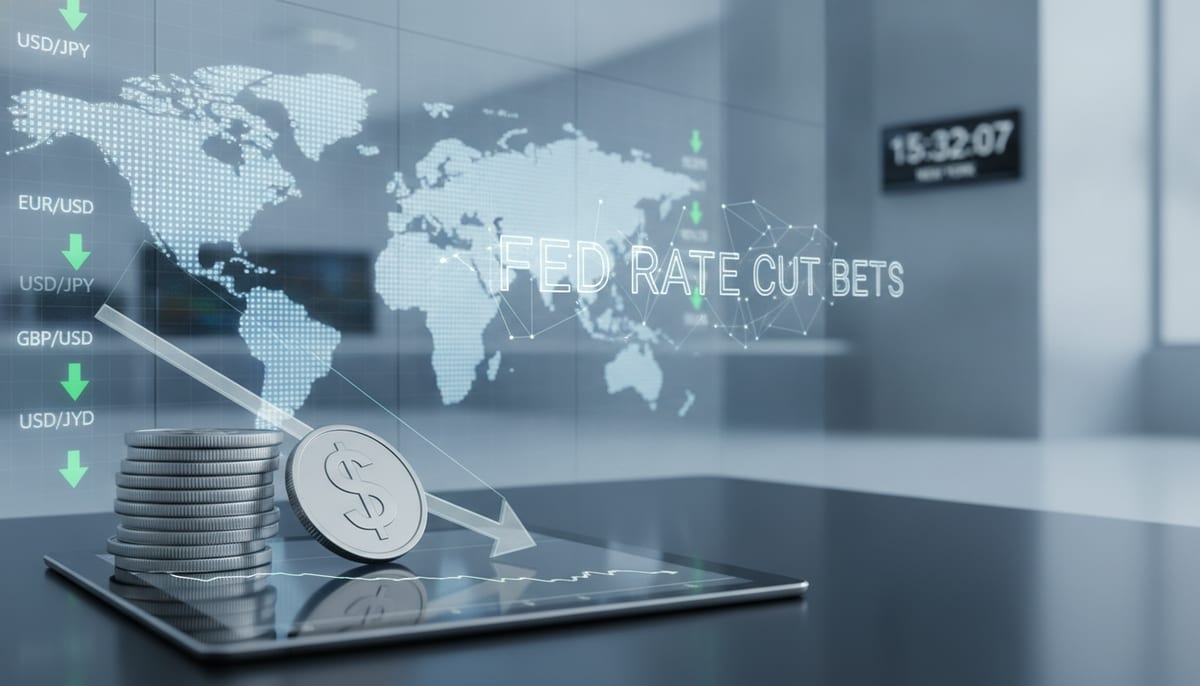
The greenback eased against its major peers after a stretch of softer-than-expected US economic data pushed traders to raise their bets on Federal Reserve interest rate cuts later this year, according to Reuters. Treasury yields edged lower at the same time, and currencies tied to risk appetite firmed as the dollar gave ground.
A familiar pattern. Weak data lands, rate-cut expectations climb, and the dollar loses one of the things that has kept it bid — its yield advantage over much of the developed world.
Why softer data pushed the dollar lower
The Fed sets policy off two things: inflation and the jobs market. When the numbers come in cooler than forecast, traders read it as room for the central bank to ease. Lower expected rates feed straight into lower Treasury yields, and a smaller yield means a less attractive dollar for investors hunting returns.
The US Dollar Index (DXY), which measures the greenback against six major currencies, eased as that repricing worked through the market. Money rotates out of dollar-denominated assets when their rate premium shrinks. It’s the rate-differential trade running in reverse. Nothing exotic about it.
What makes this move worth watching isn’t the size of any single session’s slide. It’s the direction of travel. For much of this tightening cycle, the dollar leaned on the fact that US rates sat higher than those in the euro zone, Japan, and most of its peers. Any data that narrows that gap gets sold, and quickly.
What traders are actually pricing
The shift is about probability, not a sealed outcome. Markets moved to price a higher chance of Fed cuts arriving later in 2026, Reuters reported — not a guarantee that they land on any particular date. Fed officials have said repeatedly that decisions stay tied to incoming data, and one firmer inflation print can pull expectations back the other way.
That conditionality matters. Rate-cut bets are a running tally that traders update with every data release, every speech, every revision to a prior month’s figures. The latest soft patch nudged that tally in a dovish direction. It didn’t settle the argument.
There’s a positioning angle too. When a crowded long-dollar trade meets data that undercuts the thesis, the unwind tends to move faster than the build-up. Traders who were betting on “higher US rates for longer” have less reason to hold once the data starts pointing the other way.
The currencies on the other side
A weaker dollar has to show up somewhere, and it usually shows up in the currencies most sensitive to risk appetite. Reuters flagged support for those risk-sensitive currencies as the greenback slipped. The Australian and New Zealand dollars, along with several emerging-market currencies, typically catch a bid when the dollar softens and traders feel comfortable reaching for yield elsewhere.
The euro and the British pound sit in the same trade from the other direction. When the spread between US yields and their own narrows, both tend to firm against the dollar without needing any good news of their own. Their gains say more about the dollar stepping back than about any strength at home.
What to watch next
Attention now turns to the next round of Fed commentary and US data, which will either confirm the dovish read or break it. The labour market reports, the monthly inflation prints (both the consumer price index, or CPI, and the Fed’s preferred personal consumption expenditures, or PCE, gauge), and the next Federal Open Market Committee (FOMC) meeting all feed the same question: is the slowdown real enough to force the Fed’s hand?
Traders will be watching the yield curve for confirmation. If Treasury yields keep drifting lower, the dollar’s path of least resistance stays down. A hot data surprise flips that script in a single session.
The risk for anyone leaning into dollar weakness here is that the market has run ahead of the Fed before in this cycle — more than once. Rate-cut bets have built up on soft data, only to deflate when the next number came in hot or a Fed speaker pushed back. The dovish repricing is real, but it rests on a thin run of data, and thin runs reverse.
The cleaner read is that the dollar has lost its one-way support. For a long stretch, the US rate premium did the heavy lifting and traders didn’t need a second reason to be long the greenback. That cushion is thinner now. It doesn’t mean the dollar collapses. It means each new data point carries more weight, and the market is paying closer attention to the downside than it was a few months ago.
For now, the dollar trades on the data, one release at a time. The next print does more to set its direction than any forecast will.
About Author