Trump’s War Resolution Comments Trigger Historic Oil Reversal and Reshape Forex Markets
 Robert J. Williams
  Alexandra Winters
President Trump’s unexpected statement on March 10 that the Iran conflict would end “soon” became one of the most consequential market-moving events in recent memory, reversing one of the most volatile commodity price swings in years. West Texas Intermediate crude oil collapsed from intraday highs near $120 per barrel to below $90 within hours—a stunning 25% decline that rippled across global currency and equity markets.
The reversal caught many traders off guard. Markets had grown increasingly pessimistic about conflict duration, with Pentagon intelligence assessments suggesting operations could last six weeks or longer. Trump’s remarks fundamentally altered expectations, providing what equity investors interpreted as a political off-ramp for escalation. The S&P 500, which had tested critical support near 5,000, reversed sharply higher on improved risk sentiment.
What Drove the Initial Oil Spike?
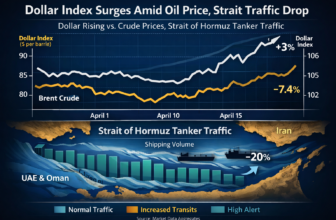
Before Trump’s comments, crude prices had surged dramatically following a joint US-Israel strike on Iran that killed Supreme Leader Khamenei early Saturday. The attack triggered panic buying as traders grappled with Strait of Hormuz closure—a waterway through which approximately 20% of global crude supply typically flows. Traffic through the strait declined by roughly 70% following Iranian attacks on tankers and declarations that the waterway was closed.
Key drivers of the initial panic:
- Widespread assumption that regime change operations would extend six or more weeks
- Near-total closure of Hormuz shipping traffic
- Speculative long positioning accumulating in oil futures
- Safe-haven flows into crude as a geopolitical hedge
The Catalyst: Trump’s Conditional “Soon”
Trump’s public statement that conflict would end “soon”—with the caveat that “soon” meant longer than one week—provided crucial nuance that markets had lacked. The president’s comments effectively signaled that while military operations would continue, the administration saw a pathway to resolution, easing extreme worst-case scenarios that had driven the initial $120 spike.
Currency market response was immediate. The Australian Dollar surged to levels unseen since mid-2022, climbing toward 0.7040 as risk sentiment improved and commodity prices stabilized. Safe-haven flows reversed as the US Dollar weakened and investors rotated back into risk assets perceived as offering better value.
International Energy Agency Proposes Historic Oil Reserve Release
In parallel with Trump’s comments, the International Energy Agency announced during an emergency meeting that it was considering the largest coordinated strategic petroleum reserve release in organizational history. The proposal would exceed the 182 million barrels released in February 2022 following Russia’s Ukraine invasion, signaling government seriousness about preventing sustained inflation.
IEA capacity and scope:
- 32 member countries hold approximately 1.2 billion barrels in reserves
- Additional 600 million barrels in mandatory commercial inventories
- Theoretical supply sufficient to cover roughly 124 days of lost Persian Gulf output
- Vote scheduled for March 11, advancing unless a single country objects
The IEA announcement provided price support, with traders pricing in additional supply reaching global markets. By March 11’s Asian session, Brent crude stabilized around $88 per barrel and WTI near $84.
Currency Market Reshuffling: Winners and Losers
USD/EUR and Safe-Haven Unwinding
The US Dollar weakened significantly as safe-haven demand evaporated. EUR/USD gained ground to near 1.1620 in early Asian trading on March 11, recovering from previous session lows where the dollar had benefited from traditional risk-off flows. The stronger Euro reflected both reduced safe-haven demand and expectations that European Central Bank decisions would be influenced by energy-driven inflation—though the less severe oil scenario now being priced reduced inflation risk for the Eurozone.
Emerging Market Currency Rally
Resource-exporting currencies experienced powerful appreciation. The Australian Dollar’s strength was reinforced by hawkish remarks from RBA Deputy Governor Andrew Hauser on March 10, which prompted major banks including Westpac, NAB, Citi, and Deutsche Bank to forecast an RBA rate hike at the March 17 policy meeting. Stabilizing crude prices combined with expectations for monetary tightening created a powerful tailwind for AUD/USD.
More broadly, emerging market portfolios saw the second-largest monthly inflows in four years as investors rotated back into emerging market assets following the geopolitical shock.
USD/JPY Faces Official Intervention Signals
The New York Fed sent explicit signals that USD/JPY levels near 157–160 represented a critical intervention threshold. This rare public acknowledgment telegraphed to currency markets that breakout attempts toward higher USD/JPY would face official headwinds. When Washington and Tokyo align on currency direction and monetary policy differentials narrow—as the Federal Reserve eases while the Bank of Japan tightens—the asymmetry in carry trades shifts from one-way upside into two-way risk.
Federal Reserve Messaging Constrains Dollar Upside
The Federal Reserve’s January meeting minutes introduced nuance that ultimately constrained sustained US Dollar strength. The minutes indicated the Fed requires cleaner inflation prints before supporting market expectations for two rate cuts in 2026. The central bank signaled it was not in a hurry to cut rates but had abandoned hiking mode, establishing a conditional approach awaiting further inflation data.
This messaging initially caused dollar appreciation on what traders interpreted as hawkish rhetoric, but stripped of noise, it revealed a more balanced stance offering limited support for sustained strength. The implication is that the dollar was running on narrative momentum rather than fundamental policy divergence.
G7 and Japan Signal Broader Coordination
Japan indicated on March 11 that it possessed the capability and political will to release strategic oil reserves independently if necessary to ensure energy security, while also signaling potential G7 coordination efforts. Trade Minister Akazawa’s remarks were interpreted as both hawkish signals to Iran and reassurance to global energy markets.
The Group of Seven convened an emergency energy coordination meeting to discuss Strait of Hormuz disruptions and potential joint oil reserve releases, signaling that global governments viewed the situation as sufficiently serious to warrant multilateral action.
Analysis: The Speculative Bubble and Technical Repricing
The most significant technical development was the reversal of extreme speculative positioning accumulated following the initial conflict escalation. The spike from approximately $70 before military operations to nearly $120 represented unsustainable positioning driven by panic rather than fundamental supply-demand analysis.
Trump’s conflict resolution comments provided the catalyst for correction, with institutional trend traders appearing to exit long positions aggressively. This repricing affected currency markets that had become correlated with energy volatility, particularly the Australian Dollar, Canadian Dollar, and emerging market currencies benefiting from higher commodity prices.
Alexandra Winters Says:
“The sheer speed of the oil reversal—from $120 to sub-$90 within hours—exposes how thin liquidity has become in energy futures during high-volatility periods; traders caught long will likely seek exits into any temporary rallies, suggesting we may see additional downside pressure if Hormuz closure concerns resurface. Trump’s ‘soon’ caveat is deliberately ambiguous enough to prevent the market from fully pricing in resolution, meaning whipsaw volatility in crude, the dollar, and risk currencies remains elevated through March, with breakout direction contingent on next week’s Fed-related inflation data and IEA reserve release specifics.”
About Author