Oil Rally Ignores IEA Reserves Amid Hormuz Chaos
 Robert J. Williams
  Alexandra Winters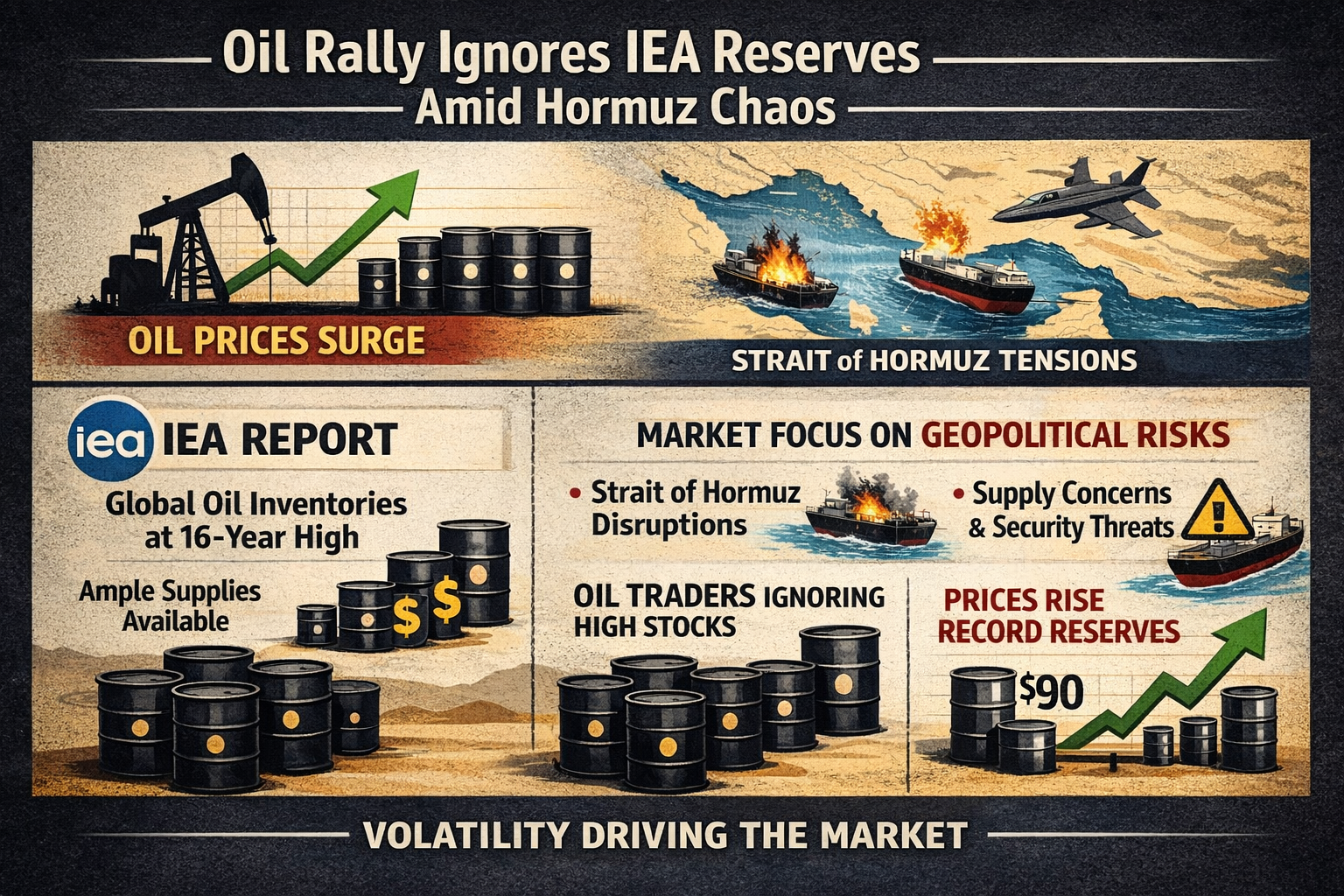
On March 12, 2026, crude prices surged despite the International Energy Agency (IEA) releasing
400 million barrels from strategic reserves—including 172 million from the United States and
80 million from Japan. The announcement, reported by ABC News, aimed to stabilize global energy
markets during escalating geopolitical tensions.
However, oil markets continued to rally. West Texas Intermediate (WTI) crude topped $90 per barrel,
while Brent crude reached $97, driven largely by fears surrounding the Strait of Hormuz. The
critical shipping corridor is currently seeing near-zero commercial traffic compared to its
normal average of about 138 vessels per day.
Key Disruptions Fueling the Rally
- Strait of Hormuz Blockade: Iranian attacks on vessels and energy infrastructure have halted approximately 20% of global oil flows, overriding stabilization efforts by the IEA.
- Price Action: WTI crude rose 6.44% to $92.87. Forecast models suggest Brent crude could reach $106 by the end of the quarter and potentially $118 within the next 12 months.
- Iran’s Stance: Tehran has pledged to block Persian Gulf oil exports to US allies, while the Revolutionary Guards have signaled that they will control the timeline of the conflict.
“The reserve release is a drop in the bucket against prolonged Hormuz closure,”
analysts noted in coverage of the IEA actions. Reports from Reuters, Bloomberg, and CNBC similarly
highlight continued attacks and ongoing disruption to global oil shipments.
Broader Market Ripples
The oil rally has strengthened safe-haven demand for the US Dollar, pushing the Dollar Index (DXY)
close to 99.50. At the same time, the euro has come under pressure due to energy-driven inflation
risks, with EUR/USD drifting toward 1.1550.
Social media sentiment reflects heightened market anxiety. Posts on Twitter/X using hashtags such
as #IranWar and #OilCrisis show traders increasingly bearish on global risk assets
while turning bullish on USD/JPY, which is approaching 157.50. Discussions on Reddit’s r/forex
community have also centered on the possibility of a global recession if Brent crude reaches $120.
Visual Idea: An interactive chart comparing pre-conflict oil flows through the
Strait of Hormuz (approximately 138 vessels per day) with current activity levels, which have
dropped to single-digit transits. The chart could include overlaid price movements for WTI and
Brent crude.
Implications for Traders and Global Economies
Rising energy prices are increasing inflation risks and complicating central bank policy decisions.
The Federal Reserve may maintain its policy rate in the 3.5–3.75% range at the March 17–18 FOMC
meeting, with markets reducing expectations for rate cuts.
Europe could face renewed pressure for European Central Bank tightening as energy costs rise,
while emerging market currencies such as the Mexican peso (MXN) and Brazilian real (BRL) have
weakened amid risk-off flows.
If disruptions persist, analysts estimate that prolonged energy supply shocks could add roughly
0.8% to global inflation, increasing the likelihood of slower growth and heightened financial
market volatility.
Alexandra Winter’s Take:
“Hormuz’s chokehold trumps IEA reserves, priming oil for $100+ if Iran digs in—traders should eye USD longs and commodity hedges, as volatility spikes favor options over spot positions amid recession whispers.”
About Author