Dollar Surges to 99 on Iran Crisis Safe-Haven Bid
 Robert J. Williams
  Alexandra Winters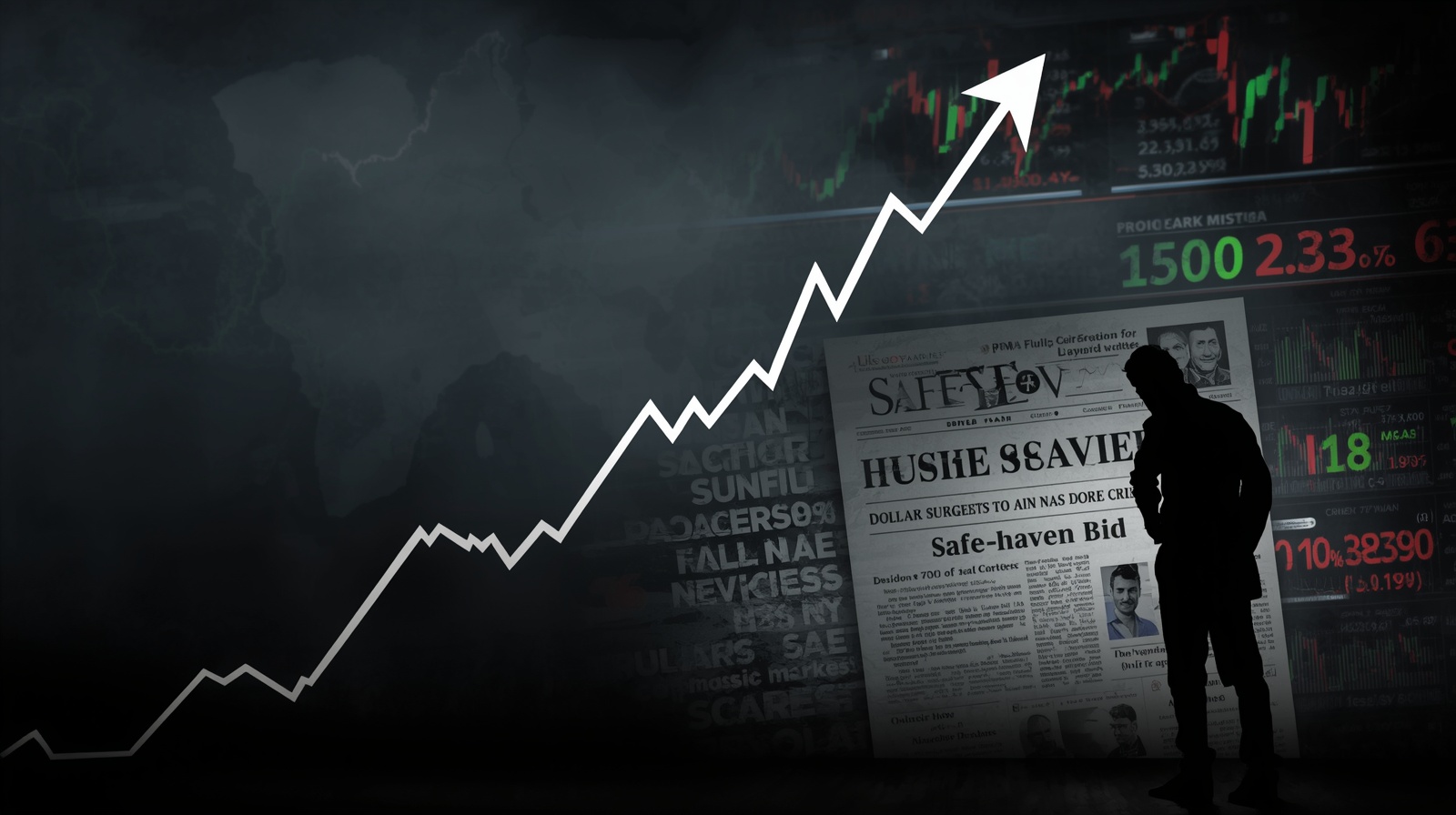
Geopolitical tensions in the Middle East are propelling the US dollar to new heights, with the Dollar Index (DXY) striking a six-week peak near 98.80–99.08 as investors seek safety amid US-Iran clashes.
This surge, up 0.8% to 0.89%, stems from a flight to dollar liquidity following military escalations, including joint US-Israeli strikes and Iran’s reported blockade of the Strait of Hormuz—chokepoint for 20% of global oil flows. The DXY reclaiming highs not seen since January 20, 2026, amid the “petrodollar trade” revival driven by climbing energy costs and US energy independence.
Key Market Drivers
- Strait of Hormuz Blockade: Iran’s actions have stranded 150 tankers, spiking Brent crude past $82/barrel and WTI to $67.78—highest since August 2025.
- Safe-Haven Shift: The dollar now doubles as a traditional refuge and inflation hedge, with analysts warning of durable strength if disruptions persist.
- Fed Policy Squeeze: Elevated oil narrows Federal Reserve rate-cut options, bolstering USD appeal.
Broader Forex Impact
The rally caps euro weakness (EUR/USD at 1.1698) and pressures pairs like GBP/USD near 1.3400, while offsetting CAD gains from oil. Precious metals like silver also rally past $94, amplifying safe-haven flows. Visual idea: Embed a live DXY chart overlaying Brent crude prices and Strait tanker traffic data for real-time context.
In analysis, prolonged blockade risks oil at $120–$150/barrel, cementing dollar dominance and complicating global central bank easing. A de-escalation could unwind premiums swiftly.
Looking ahead, traders eye Hormuz developments and OPEC+ responses; sustained tensions signal extended USD strength into Q2 2026.
Alexandra Winters says-
This dollar surge underscores a classic risk-off pivot, but its durability hinges on Hormuz blockade length—traders should position for $100 DXY if oil holds above $80, while hedging euro longs against energy shock persistence. Volatility spikes offer scalping opportunities, yet de-escalation risks swift reversals.
About Author