Geopolitical Tensions Push Oil and Gold to Multi-Month Highs as US-Iran Nuclear Talks Enter Critical Phase
 Robert J. Williams
  Alexandra Winters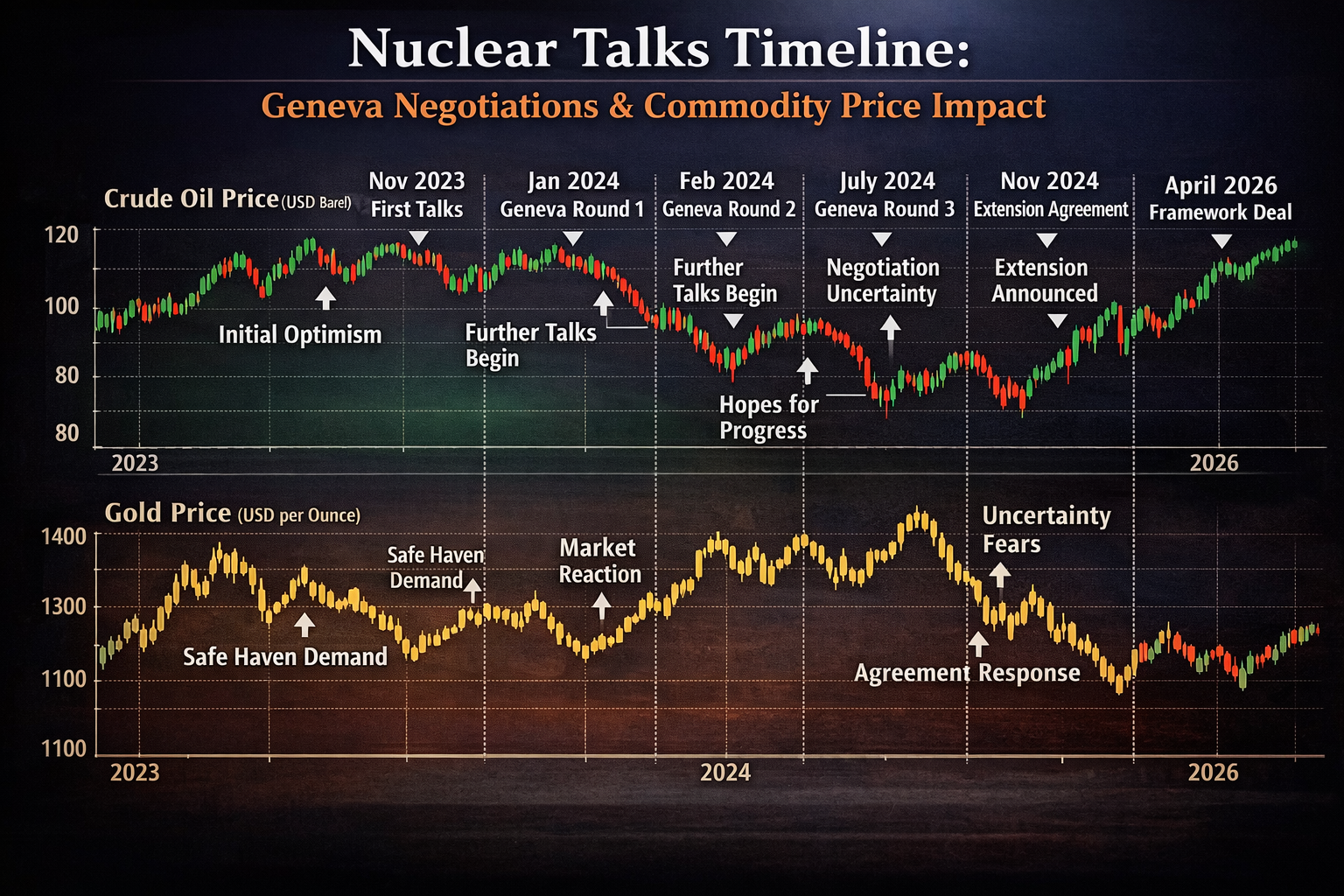
The third round of US-Iran nuclear negotiations commenced in Geneva on Thursday, creating a sharp geopolitical risk premium that has pushed crude oil toward $65.40 per barrel—the highest level in seven months—while gold rallies near the $5,200 mark.
The talks occur amid escalating military posturing, with President Trump warning Tehran of “very bad consequences” if Iran refuses to scale back uranium enrichment, while the U.S. military has assembled its largest air power deployment in the Middle East since the 2003 invasion of Iraq, including fifth-generation F-35s and F-22 Raptors.
The Negotiation Stalemate
Both sides claim incremental progress, yet fundamental disagreements persist over core terms:
U.S. Position:
– Demands no expiration date on any nuclear agreement
– Seeks complete removal of enriched uranium from Iran
– Insists Iran must never obtain nuclear weapons capability
Iranian Position:
– Proposes reducing uranium enrichment from 6% to approximately 3.6%
– Offers to suspend enrichment activities for 7 years (versus U.S. demand for 10 years minimum)
– Willing only to downgrade enriched uranium within Iran’s borders, not export it
Iranian negotiators handed a “historic” proposal to U.S. officials through diplomatic channels via Oman’s foreign minister on Thursday, framing it as a “practical test” of Washington’s commitment to diplomacy. However, Iran has warned that rejection of the proposal would confirm its suspicions that the U.S. is pursuing talks purely for appearances rather than genuine de-escalation.
Commodities Pricing in Unresolved Risk
The divergence between fundamental supply data and price movement reveals how heavily markets are weighting geopolitical outcomes. Despite the U.S. Energy Information Administration reporting a 15.989 million barrel surge in crude stockpiles—the largest weekly build since February 2023—crude prices remain elevated.
Analysts at ING Group estimate that approximately $10 per barrel of the current crude price reflects pure geopolitical risk premium, suggesting that a constructive deal outcome could trigger a significant price correction.
Military Escalation Threatens Diplomatic Progress
Iran has signaled its readiness to pursue anti-ship cruise missiles from China to counter expanded U.S. naval presence in the Persian Gulf. This arms procurement threat underscores the fragility of negotiations, as both sides accumulate military assets while ostensibly pursuing dialogue.
Vice President J.D. Vance stated that President Trump prefers a diplomatic solution but emphasized that “the president has other tools at his disposal” if negotiations fail. Secretary of State Marco Rubio has identified Iran’s conventional missile program as a major U.S. concern, expanding the scope of negotiations beyond nuclear capabilities alone.
What Happens Next?
The next critical milestone arrives in the coming days, with both delegations expected to reconvene for follow-up discussions. Market participants are closely monitoring statements from U.S. negotiators Steve Witkov and U.S. envoys for any signals of movement on the uranium removal dispute—widely viewed as the central sticking point.
Traders should expect heightened volatility in energy and precious metals until clarity emerges on:
1. Whether Iran accepts the uranium removal condition
2. The timeline for enrichment suspension commitments
3. Credible verification mechanisms both sides can accept
Alexandra Winters says:
The mathematics of geopolitical risk premiums rarely favor the patient trader; the $10/bbl buffer currently supporting crude suggests that any credible diplomatic breakthrough could trigger a flash correction that catches momentum buyers off-guard. Savvy hedgers should consider that the real trading opportunity may not be if a deal emerges, but how quickly markets reprice once certainty replaces ambiguity—potentially within hours of an announcement.
About Author